Southlake, TX · Garage Door Service
Southlake Garage Door Pros installs new garage doors in Trophy Club, 3 miles out, matched to the town's early-2000s builds and higher-end finish expectations.
Trophy Club sits three miles from our Southlake shop, which is close enough that a new-door job here runs like a same-week appointment rather than a special trip. The short drive means the truck isn't burning half a day just getting to your street, so the schedule usually comes down to when the door itself is ready, not when we can get out there.
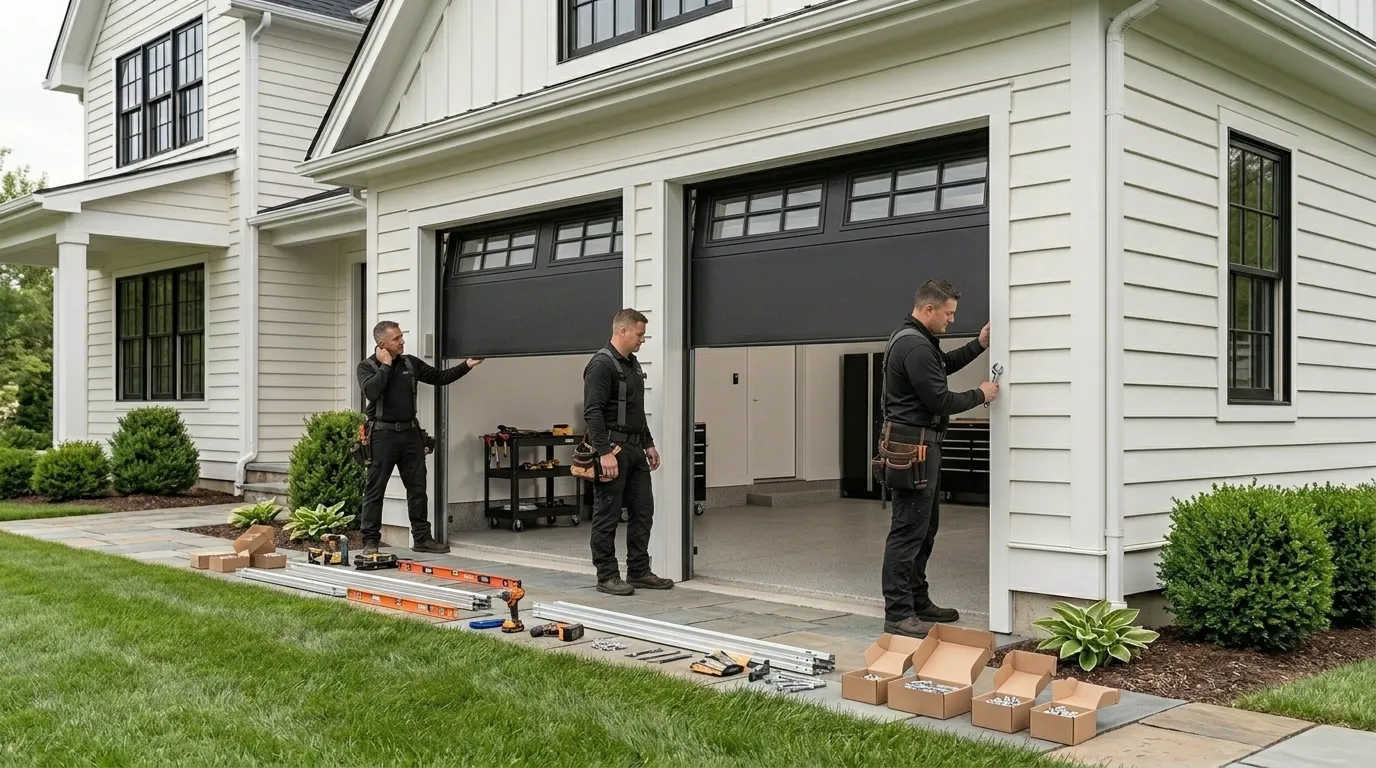
A standard sectional install, once the door is on site, takes a few hours for a single door and longer for a double or if the opener is being replaced too. What actually stretches the timeline is lead time on the door itself. Custom widths, upgraded insulation packages, and carriage-style overlays common in newer, higher-value neighborhoods often have to be ordered rather than pulled off a shelf, and that's the part that adds days, not the drive from Southlake.
You can hang a garage door yourself if you've got the tools, the patience, and someone to hold the panel steady while you're on a ladder. What trips people up isn't the panel work, it's the torsion spring and the track alignment underneath it. A torsion spring under load can put someone in the hospital if it lets go while you're setting tension, and a door that's an eighth of an inch out of level on the track will bind and wear a roller out in months instead of years.
If you're comfortable with a drill and a level and you're only swapping panels on an existing, undamaged track and opener, it's doable. If you're changing the door's width, height, or weight class, or moving from a standard-lift opener to a jackshaft or higher-lift unit to handle a heavier insulated door, that's where a mis-set spring or an under-powered opener bracket becomes a return trip nobody wants.
Trophy Club's housing stock runs newer than a lot of the towns around it, with a median build year around 2000, and that changes what kind of new-door job actually shows up. You're not usually dealing with a 1960s one-piece door on side-mount hardware. You're dealing with a 20-to-25-year-old sectional door and opener that were fine for their time but are undersized for what homeowners here are asking for now: taller openings, insulated steel or wood-composite panels, and windows or overlay trim that add real weight to the door.
The failure point is almost always the opener and the spring sizing, not the door panel. Swap a lightweight builder-grade door for a heavier insulated one and keep the old opener and spring set, and you'll get a door that struggles to open smoothly, sags at the header, or throws the opener's gear within a year. Anyone installing new here has to size the spring and opener to the new door's actual weight, not to what used to hang in that opening.
We don't have a published price list for this page, and quoting a number without seeing your opening, your door choice, and your opener situation would be a guess dressed up as a fact. What does move the price in Trophy Club specifically is the tier of door homeowners tend to choose. With median household income in this area well above the broader service area's figure, we see more requests for insulated steel doors with wood-look overlays and windows, and fewer requests for the bare, uninsulated builder-grade door that's more common elsewhere.
That preference doesn't mean every install here is expensive. A basic steel replacement costs what it costs regardless of the neighborhood. But if you're comparing a quote here to what a neighbor in a different town paid, ask what door tier they bought before assuming the number should match.
The area sits in a moderate-heat climate band, which is kinder to garage door hardware than a true extreme-heat zone, but it still means steel skins and opener electronics take a real summer beating for months at a time. Combine that with the heavier, better-insulated doors that fit the newer, higher-income housing stock here, and you get openers working harder to lift more weight in heat they weren't necessarily sized for.
The failure we see is a mismatch: a homeowner upgrades the door to something heavier and better-looking, keeps the decade-old chain-drive opener, and by the second or third summer the opener is straining, the gear is stripped, or the door is drifting off its track under the extra load. New installation done right here means sizing the spring and opener to the door you're putting in, not the one that used to be there, and accounting for a Texas summer doing that lifting work every single day.
About three miles. It's a short trip for us, so scheduling a new-door install here isn't limited by drive time. What sets the timeline is usually how long the door itself takes to arrive, especially if it's a custom width or an upgraded insulated panel rather than a stock size.
Trophy Club's housing stock is generally newer, with a median build year around 2000, so most homes here already have sectional doors on standard track rather than older one-piece hardware. The bigger factor is usually upgrading a builder-grade door and opener to match a heavier, better-insulated replacement.
Not always. If you're moving from a light, uninsulated panel to an insulated steel or overlay door, the added weight can be more than your existing opener and spring were sized for. That mismatch is the most common reason a new door starts sagging or straining the opener within a year or two.
You can, and for some openings that's the right call. But we won't quote you a number without knowing your opening size, door weight, and opener condition, since guessing at a price here would mean guessing at your actual job.
Call or request a quote - tell us what your door is doing and where you are.