Southlake, TX · Garage Door Service
Worn or cracked rollers on Southlake garage doors, tied to the area's 2000s-era housing stock and long summer heat. Here's what the fix involves and how long it takes.
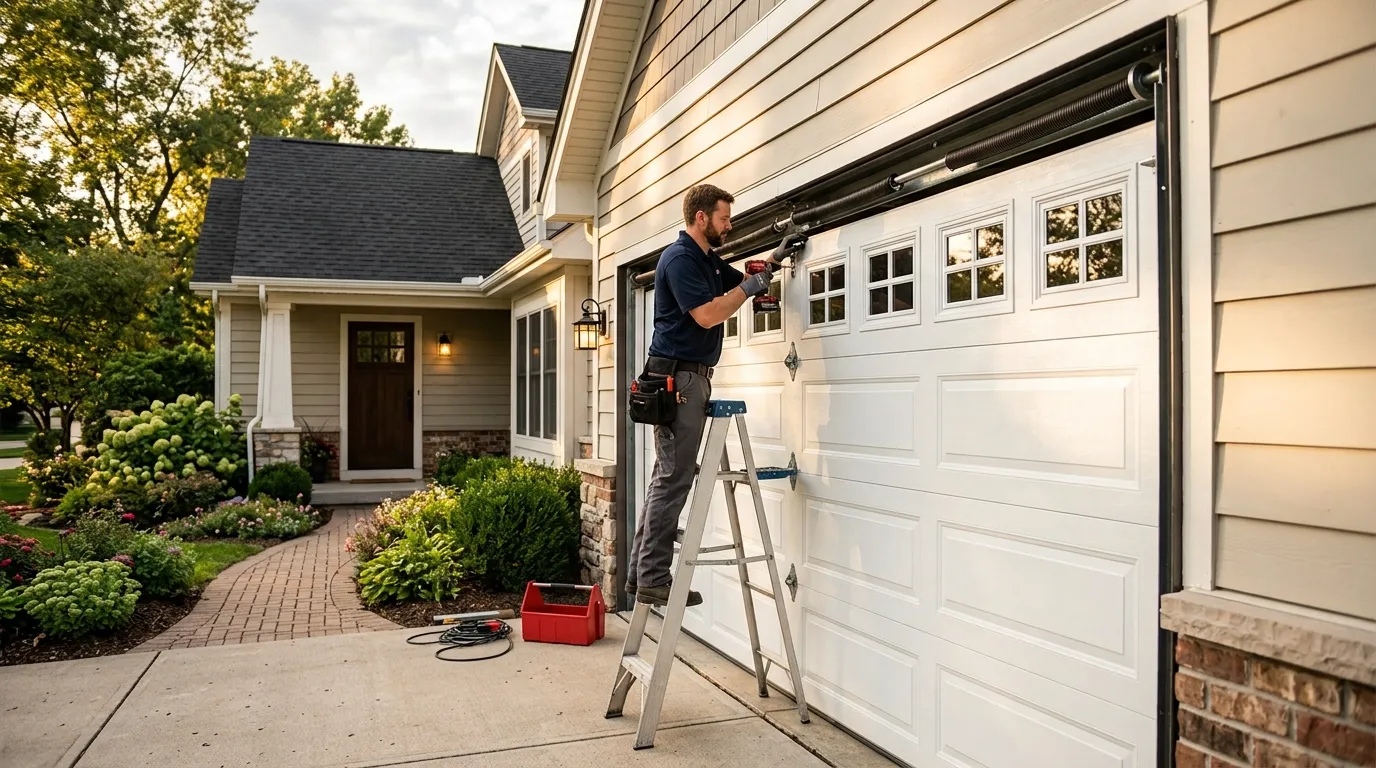
Roller replacement means pulling the old rollers out of the track brackets, one at a time, and setting new ones in without letting the door drop off the vertical track while a bracket is open. On most doors built in the last twenty years that's ten rollers - two per hinge point plus the bottom fixtures - and each one gets checked against the hinge hole it rides in, because a worn hinge will chew through a brand-new roller in a year.
We don't replace rollers we haven't pulled and looked at. If a track is bent instead of the roller being shot, swapping the roller doesn't fix the noise - the track needs to come back into alignment first, and that's a different job. Nylon rollers with sealed bearings are the standard replacement on the doors we see most often in this area; steel rollers are cheaper but they're also the ones that show up worn after a shorter stretch of daily openings.
We also check the track-to-wall mounting while we're in there. A roller can look fine and still bind if the bracket behind it has worked loose, which happens more on doors that get opened and closed several times a day - garage as a second entrance, not just for the car.
A straight roller swap on a double door, all ten rollers, usually runs under two hours once we're on site with the right size in the truck. Single doors go faster. What adds time is a bent track section or a hinge that's stripped out - both mean extra parts, and if we don't have the exact size in stock, that can push the job to a second visit.
We won't tell you every job wraps in an hour just to sound quick. Track alignment work takes as long as it takes, and rushing it means the door comes off track again in a few months.
Most of the housing stock across this service area was built between 1953 and 2014, with the bulk of it going up around 2000 - meaning a large share of garage doors out here are old enough that their original rollers have logged fifteen to twenty years of cycles, but not so old that owners think of them as needing attention yet. That's the exact age band where roller failure shows up as noise long before it shows up as a stuck door.
The climate here sits in a moderate-heat band, and that matters more than people expect for rollers specifically. Steel rollers and their bearings expand and contract with the swing between a hot garage in the afternoon and a cooler night, and that cycling dries out the lubrication and pits the bearing race faster than in a climate that stays closer to one temperature. Nylon rollers hold up better through that swing, which is part of why we default to them.
Across the towns we cover, the housing is fairly consistent in age - mostly 2000s construction - so this isn't a problem specific to one subdivision. It's a function of the doors themselves reaching the point where the original hardware is due, combined with a summer heat pattern that shortens the life of whatever roller was installed at build.
You'll hear it before you see it - a grinding or rattling sound as the door travels, worse near the top or bottom of the run where the roller is under more load turning the curve into the horizontal track. Some owners describe it as the door sounding like it's dragging gravel. If you look at the rollers themselves and see flat spots, cracks, or a roller that's visibly smaller on one side than the other, that's a roller past its life, not a spring or opener problem.
A door that shudders or jumps slightly as it opens, even though it still opens all the way, is often a roller starting to bind in the track rather than a full track misalignment. If the door won't move at all, or moves and then reverses, that's more likely a different issue and worth a separate look rather than assuming it's the rollers.
Springs usually show up as the door feeling heavy or not opening at all, sometimes with a loud bang when one lets go. Rollers show up as noise during a normal, otherwise-working open and close - grinding, rattling, or a slight jump as the door travels. If the door still opens fully but sounds rough doing it, rollers are the more likely cause.
Usually all of them, since they're wearing on the same schedule and the labor to open the track is the same whether we replace one or ten. If only one shows real damage and the rest check out clean, we'll tell you - we're not going to swap parts that don't need it.
Often, yes, if the noise is coming from worn rollers and the track itself is straight. We check the track and hinges along with the rollers, because a bent track will make a new roller noisy again within months, and that's a different repair.
For this area, generally yes. Nylon rollers with sealed bearings hold up better through the daily heat swing in a garage than steel rollers do, and they run quieter from day one. Steel is cheaper up front but tends to need replacing again sooner.
Call or request a quote - tell us what your door is doing and where you are.