Southlake, TX · Garage Door Service
Torsion spring repair for Saginaw's late-1990s garage doors, serviced from Southlake, 14 miles out. Straight talk on cost, parts, and what breaks first.
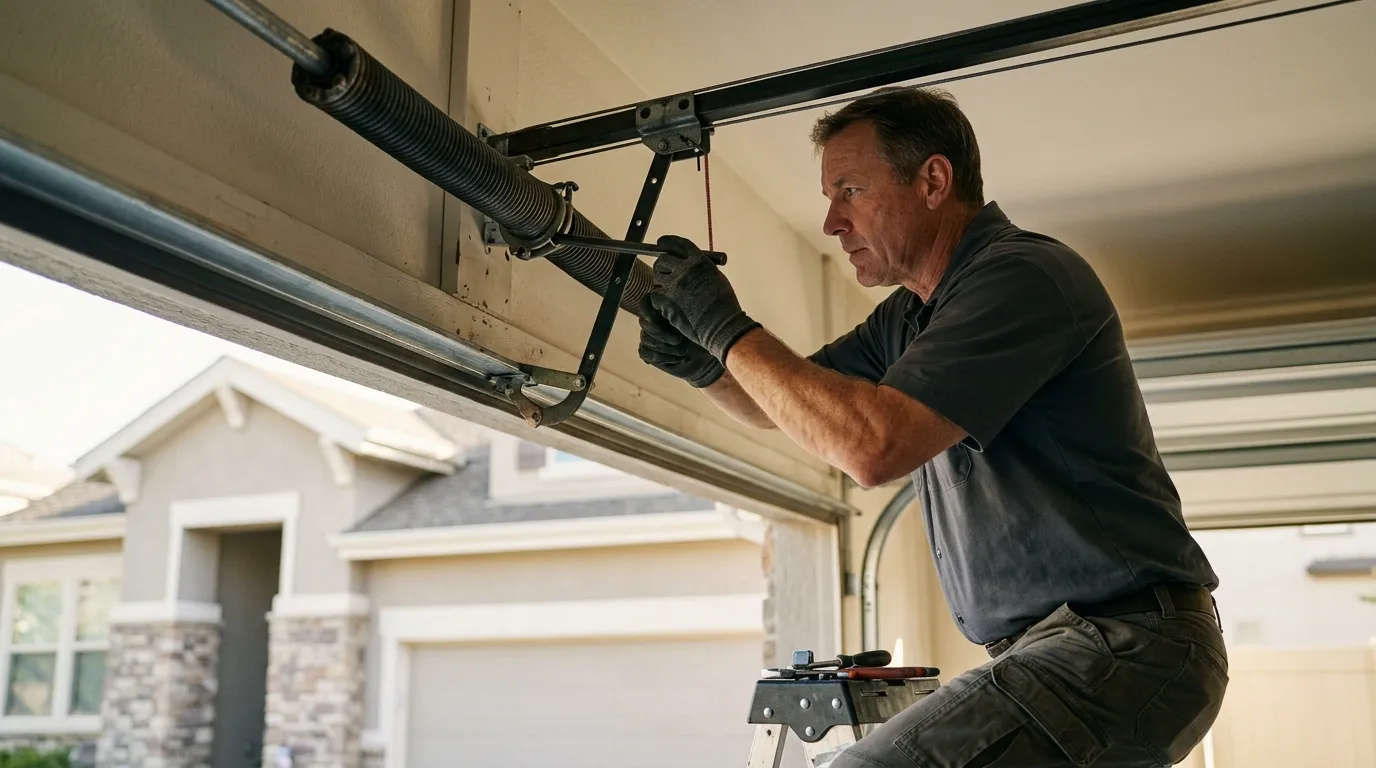
Southlake's housing stock runs from 1953 clear up to 2014, with the median landing around 2000. Saginaw sits close to that citywide median at 1999, which sounds like a rounding error until you're standing in front of a door that won't budge. A door built right around that year usually still has its original torsion spring, and by now that spring has gone through close to 25 years of daily cycles. What you notice first is the door feeling heavier than it used to, or the opener straining and reversing halfway up. Sometimes there's a bang from the garage - that's the spring letting go, usually while nobody's home. The cable might still look fine even after the spring snaps, which is why people sometimes try to force the door open and bend a track instead of just calling for the spring.
The give-away sound is a loud pop, not a slow creak. If you're getting a slow creak and increasing effort instead, that's more often a rusted bearing or a dry roller than the spring itself, and it's worth knowing the difference before you start pulling on anything.
Most of the trouble on a spring job like this isn't the spring - it's the winding cones and the center bracket that's been holding roughly a quarter-century of tension. When a spring on a 1999-era door fails, the mounting hardware around it has usually corroded a bit too, especially since this area falls in a moderate-heat climate band where garages run hot for long stretches of the year and metal fatigues faster than people expect. Pull the spring without checking the bracket and you can end up with a second problem stacked on the first.
The other place this goes wrong is torque. Doors from this build era were sized for the springs that came with them, and a spring swapped in without matching that torque to the door's actual weight will either strain the opener or leave the door drifting up or down on its own. That's a comeback call waiting to happen, and it's the kind of shortcut that shows up six months later, not the same day.
We'll say this straight: a torsion spring under full tension can put someone in the hospital, and winding bars and a locked door frame aren't optional gear, they're the difference between a repair and an ER visit. If you don't already own the right bars and know how to seat them, this isn't the job to learn on. Where a homeowner can actually help themselves is diagnosis - lifting the door by hand with the opener disconnected tells you a lot. If it's heavy and drops on its own, that's spring. If it's smooth but the opener still struggles, look elsewhere first.
We don't recommend attempting the spring swap itself without the right tools, and we won't walk someone through it over the phone for their safety and ours.
We don't have a fixed number to quote here without seeing the door - torsion spring pricing depends on door weight, spring size, and whether one or both springs need replacing, plus whether the drums or cable took damage when the old spring failed. What we can tell you is that this area's household income runs lower than Southlake's overall median of $119,803, and we price the same parts and labor here as we do closer in - the job doesn't change because the drive is fourteen miles instead of four.
We carry common torsion spring sizes on the truck because most of the doors built between 1953 and 2014 across this service area cluster tightly around 2000s-era hardware - that's the stock we plan around. A door built close to 1999, like the typical Saginaw house, generally takes a spring size that's still common today, so we can usually finish the swap on the same visit rather than ordering. Where we do have to order is unusual spring gauges on older custom doors or oversized commercial-style residential doors, and that's a real limitation - if your door falls outside the common range, expect a short wait on parts rather than a same-day fix.
A standard torsion spring swap, once we're on site, usually runs under two hours for a single spring and a bit longer for a matched pair on a double-wide door. Since we run this call out of Southlake, about 14 miles from Saginaw, plan for drive time on top of that rather than assuming a same-hour arrival. If the bracket or drums need attention too - which comes up more often on doors pushing 25 years old - add time for that inspection before we commit to a spring-only fix.
No. A broken spring usually means the door feels sudden dead weight or won't lift at all, often with a loud bang at the moment it fails. A broken cable tends to show as the door hanging crooked on one side. Both need the door left alone until a tech looks at it, since a cable can still be under tension even with the spring gone.
Torsion springs are rated for a number of open-close cycles, not a calendar date, but a door built around 1999 has usually racked up close to that cycle limit by now regardless of climate. Combine that with a moderate-heat climate wearing on the metal and bracket hardware over two and a half decades, and failure around this age is common, not unusual.
We run this call from Southlake, about 14 miles out, and carry the common torsion spring sizes that fit most of the 2000s-era stock across the service area. If your door uses an unusual or oversized spring we may need to order it, but for a typical residential door built in that window we're usually equipped to fix it the same visit.
Call or request a quote - tell us what your door is doing and where you are.