Southlake, TX · Garage Door Service
Saginaw houses run mostly 1999-built with steel rollers wearing out on original tracks. Southlake Garage Door Pros travels 14 miles out to fix them without upselling a full door.
At a median household income of $98,003, most Saginaw homeowners calling about a noisy or jumping door aren't looking to replace the whole thing - they want the roller problem fixed and the bill to make sense. That's usually the right instinct here. Saginaw's housing stock runs mostly around a 1999 build year, which puts a lot of doors on steel rollers riding in tracks that have seen twenty-plus years of use without ever being touched.
The symptom is almost always the same: a grinding or clunking sound as the door travels, worse at the top or bottom of the run, sometimes a visible wobble in the panel as one roller catches. Some owners notice the door hesitating partway up, like it's fighting the track instead of gliding through it. That's a roller either worn round on the edges or cracked at the stem, and it's rarely an emergency - but it doesn't get better on its own, and a seized roller can eventually bend the track it's riding in, which turns a $200 fix into a $600 one.
The failure that actually costs Saginaw homeowners money isn't the roller itself - it's what a worn roller does to the track over months of scraping. On a house built around 1999, the track brackets are original, and once a track gets bent from a roller catching wrong, straightening it is a judgment call: sometimes it flexes back fine, sometimes it's stressed enough that it'll bend again in a year.
The other place this goes sideways is diagnosis. A rattling door gets blamed on the opener, or the spring, when the actual cause is a roller that's shed its bearing and is running on bare metal. Swapping rollers without checking the track alignment first just moves the noise somewhere else for a few months. This is the honest limitation on this job: if the track itself is bent or the brackets have pulled loose from the jamb, roller replacement alone won't quiet the door, and pretending otherwise just means a second call.
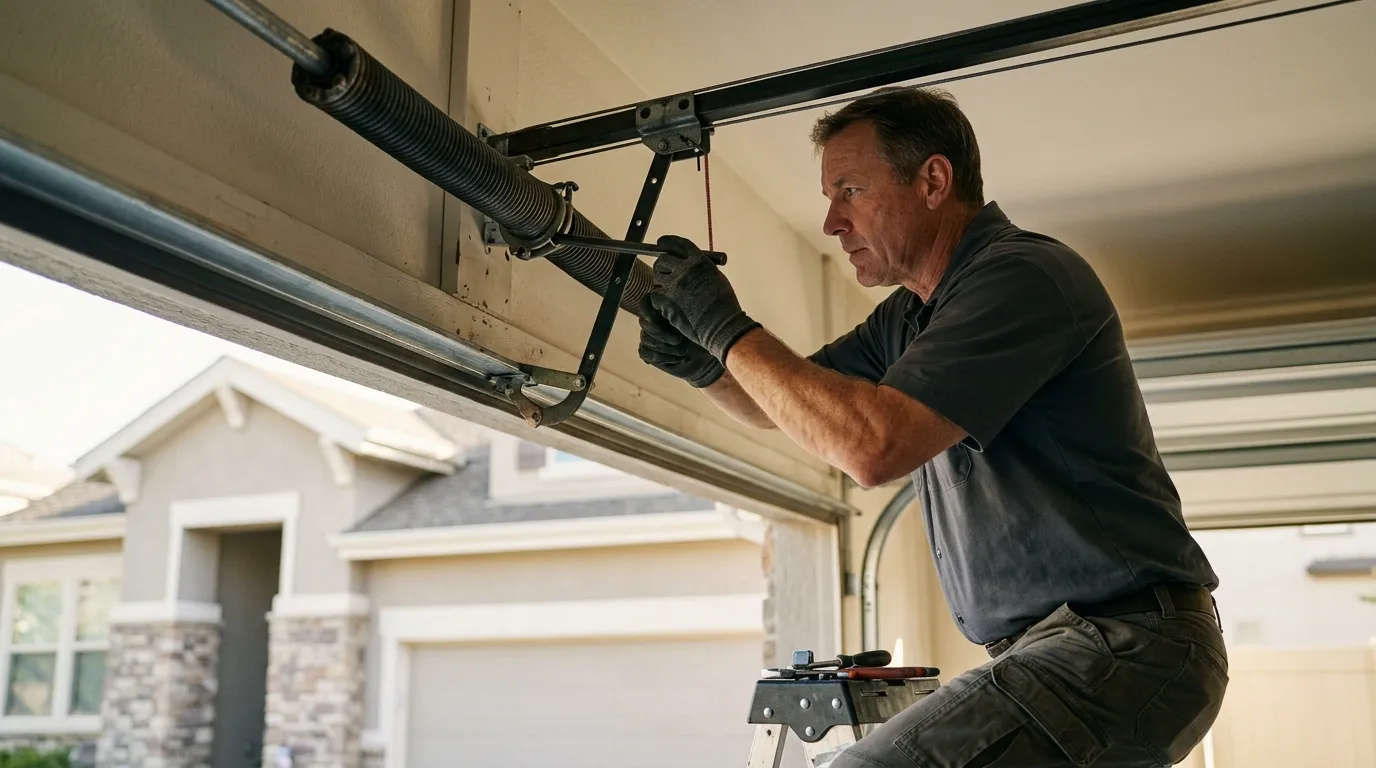
Plastic rollers on a light single door are within reach for a patient homeowner with the right tools - the door has to come off tension safely, which means understanding the spring first. Steel rollers, ball-bearing rollers, or anything on a door with a torsion spring under real load is a different situation: the roller sits close enough to the cable and track that a slip means a pinched hand or a dropped panel, not just a wasted afternoon.
If your Saginaw house still has its original 1999-era hardware, assume the springs are original too and treat the whole system as under more tension than a newer door, not less. That's not a reason to avoid the job, it's a reason to know your limit before you start.
We don't publish a number here because roller jobs in Saginaw split into two very different categories and quoting one price would be misleading either way. A straight swap of nylon rollers on a door that's otherwise sound is a modest parts-and-labor job. A job where the track is bent, the brackets have worked loose from the jamb over twenty-plus years, or the rollers have already chewed into the track rail costs more because it's really two repairs wearing one name.
With a median income of $98,003 in Saginaw, most owners we talk to want the cheaper path confirmed or ruled out before committing to anything bigger, which is exactly the order we work in: check the track and hardware first, quote roller-only if that's genuinely all it needs.
Nylon rollers, steel rollers, and standard ball-bearing rollers in the common stem lengths are the kind of part that fits a wide range of doors built across the 1953-2014 span this area represents, so they're not a special-order item. What's not guaranteed off the truck is a track section or bracket matched to an odd or discontinued profile - most 1999-era Saginaw doors use common hardware, but not every one does, and that's confirmed on site, not over the phone.
A straight roller swap on one door, once we're on site and the diagnosis holds, is a same-visit job - it doesn't require ordering anything for the common roller types. If the track needs straightening or a bracket needs re-anchoring, that adds time to the same visit rather than requiring a second trip, in most cases. We travel the 14 miles out from Southlake for this job, so there's no local branch or drop-in option - the call gets scheduled, not walked in.
That's usually a roller catching on the track in one direction because of wear or a slight track misalignment - common on doors from Saginaw's 1999-era housing stock that have never had the track checked. It's worth having it looked at before the roller seizes completely and bends the rail.
Nylon, steel, and ball-bearing rollers in standard stem lengths are stocked, and those cover most doors built in the 1953-2014 range this area falls into. What we confirm on site is whether the track or bracket also needs work, since that's not always obvious until we're looking at it directly.
For most Saginaw homes, roller replacement is the right call if the track and panels are otherwise sound - it's a fraction of a full door's cost. Replacement only makes sense once the track is repeatedly bending or the panels themselves are damaged, which is a separate conversation from rollers.
We don't operate a branch in Saginaw - we travel from Southlake, about 14 miles away, so scheduling is by appointment rather than same-day drop-in. We'll give you a real window when you call rather than guess at one here.
Call or request a quote - tell us what your door is doing and where you are.