Southlake, TX · Garage Door Service
Saginaw homes built around 1999 run original torsion springs and openers pushing 25 years. We travel from Southlake for repairs, springs, and openers on this stock.
Saginaw's median home dates to about 1999, which means a lot of doors here are still running the torsion spring, the opener, and the drum hardware the builder put in the day the house went up. Twenty-five years on one spring is a long run. What you notice first is usually small: the door hesitates a half-second before it lifts, the opener strains and clicks before the motor catches, or the door slams the last six inches instead of settling. None of that is dramatic. It's a spring that's lost tension gradually, not one that snapped, and most owners live with it for months before calling. By the time the door won't open at all, the spring has usually gone from tired to broken, and the cable or drum on one side has taken damage from the uneven pull. Catching the hesitation early is cheaper than catching the seized door later.
Across the wider service area, most of the housing dates from 1953 to 2014 with a median build year around 2000, so Saginaw's stock sits right in that middle band - old enough for original hardware to be aging out, not so old that parts are unrecognizable. That's the window where a spring swap is routine and a full door replacement usually isn't necessary yet.
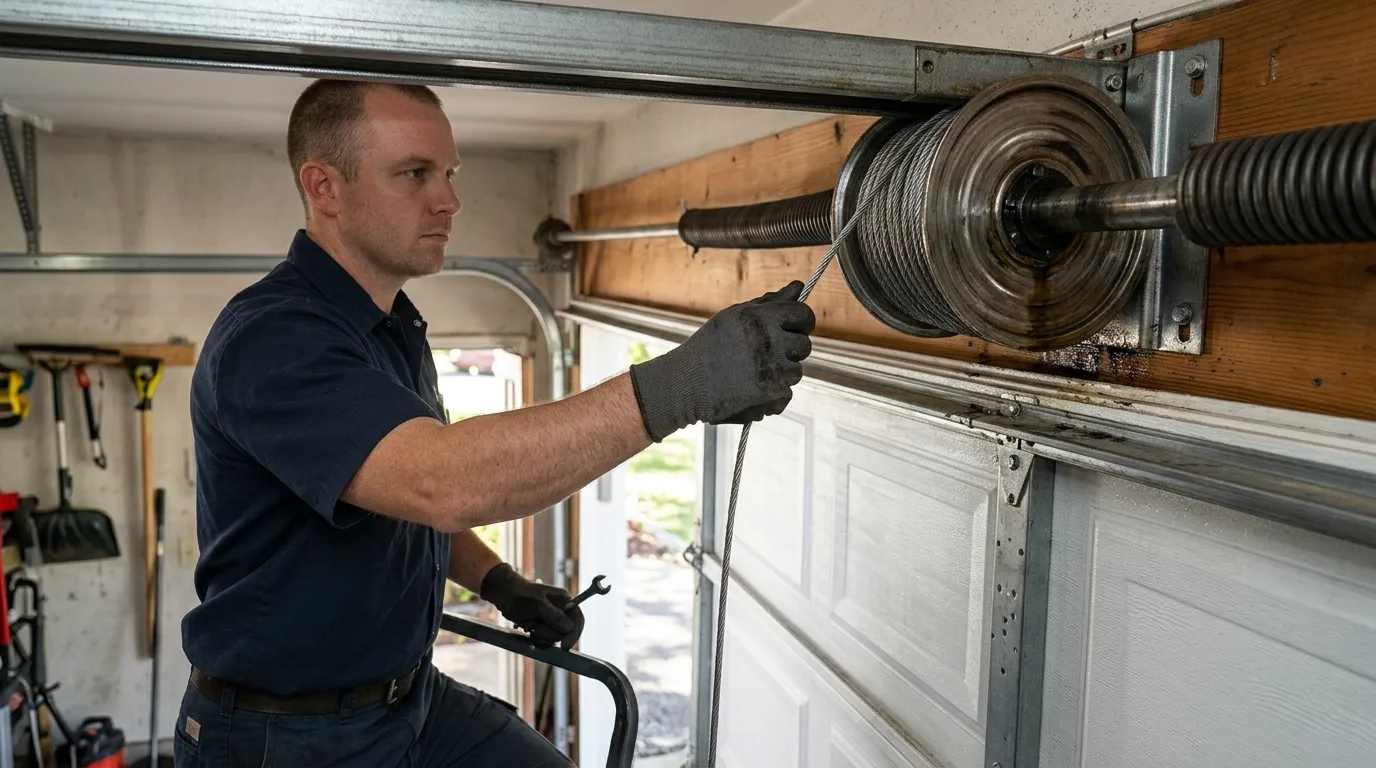
The trouble on a 1999-era door isn't the spring itself - it's what the spring was hiding. When one side of a torsion system has been weak for months, the opposite cable and the roller track on that side absorb extra strain every time the door cycles. Pull the old spring and you sometimes find a bent track, a frayed cable close to failure, or a drum with wear grooves that shouldn't be there yet. A straightforward spring swap turns into a track alignment and a cable replacement in the same visit, and the homeowner who booked a one-part fix ends up with a three-part bill.
The other place this goes sideways is the opener. A motor built into a late-90s door was never rated for the extra draw of a spring that's lost tension - it's been overworking for a while before it finally trips a breaker or burns out a gear. If the opener dies the same week as the spring, that's not a coincidence, it's cause and effect. We check both before quoting either one.
Changing a broken garage door spring yourself is genuinely dangerous - a wound torsion spring under load can break a wrist or worse if the winding bars slip, and that risk doesn't go down because the house is older. What you can safely do yourself: tighten loose hinge bolts, clear the track of debris, lubricate rollers and hinges, and test the balance by disconnecting the opener and lifting the door by hand halfway (it should hold its position, not fall or fly up). If it doesn't hold, that's a spring tension problem and it's not a DIY job. Anything involving the spring, the cable, or the drum is where we tell people to stop and call.
We don't have a published price list for this page, and we'd rather tell you that than guess a number that doesn't hold once we're looking at the actual hardware. What we can tell you is what drives the number on a house like yours: whether it's a spring-only job or a spring plus a damaged cable and track, whether the opener needs replacing alongside it, and whether the door itself is original steel or has been swapped since 1999. A straight spring replacement is a smaller job than a spring-plus-opener-plus-track visit, and we'll tell you which one you're in before we start any work, not after.
We keep common torsion springs, standard rollers, and standard cable sizes on the truck out of Southlake, which covers most late-90s and 2000s builds without a special order. Where we run into a delay is uncommon spring sizes, older opener models that have been discontinued, or non-standard door panel sizes on custom builds - those get ordered in rather than pulled off the shelf. If your door is original to 1999, odds are good the spring and cable sizes are common ones we already carry.
A standard spring replacement on site typically runs under two hours once we're there, including balance testing after. Add a cable or track repair and you're looking at a longer visit, still same-day. Opener replacement adds time on top of that for mounting and wiring in the safety sensors. We travel to Saginaw from Southlake, about 14 miles out, so schedule the visit rather than expect a walk-up same-hour arrival - we'll give you a window when you call, not a guess.
It's likely, unless a previous repair replaced it. A torsion spring lasts roughly 10,000 cycles, which for an average household works out to somewhere in the 7-15 year range - so a spring installed in 1999 has usually already failed once or is due. If nobody remembers a spring replacement, plan on it being original and aging.
A weak spring makes the opener motor do the lifting the spring should be doing. Over months that extra load wears down gears and overheats the motor. When the spring finally breaks, the opener is often already close to failing too - the timing isn't a coincidence.
We stock common rollers, cables, and torsion springs that cover most 1990s and 2000s builds. Discontinued or unusual opener models sometimes need to be special-ordered rather than pulled from the truck, which we'll tell you up front before booking the job.
About 14 miles. We travel out to Saginaw for service calls rather than keeping a branch location there, so we schedule visits with a window rather than offering walk-up same-hour arrival.
Call or request a quote - tell us what your door is doing and where you are.