Southlake, TX · Garage Door Service
Southlake homes built mostly in the 2000s are hitting spring and opener wear at the same time. We diagnose and fix torsion springs, cables, and openers on-site.
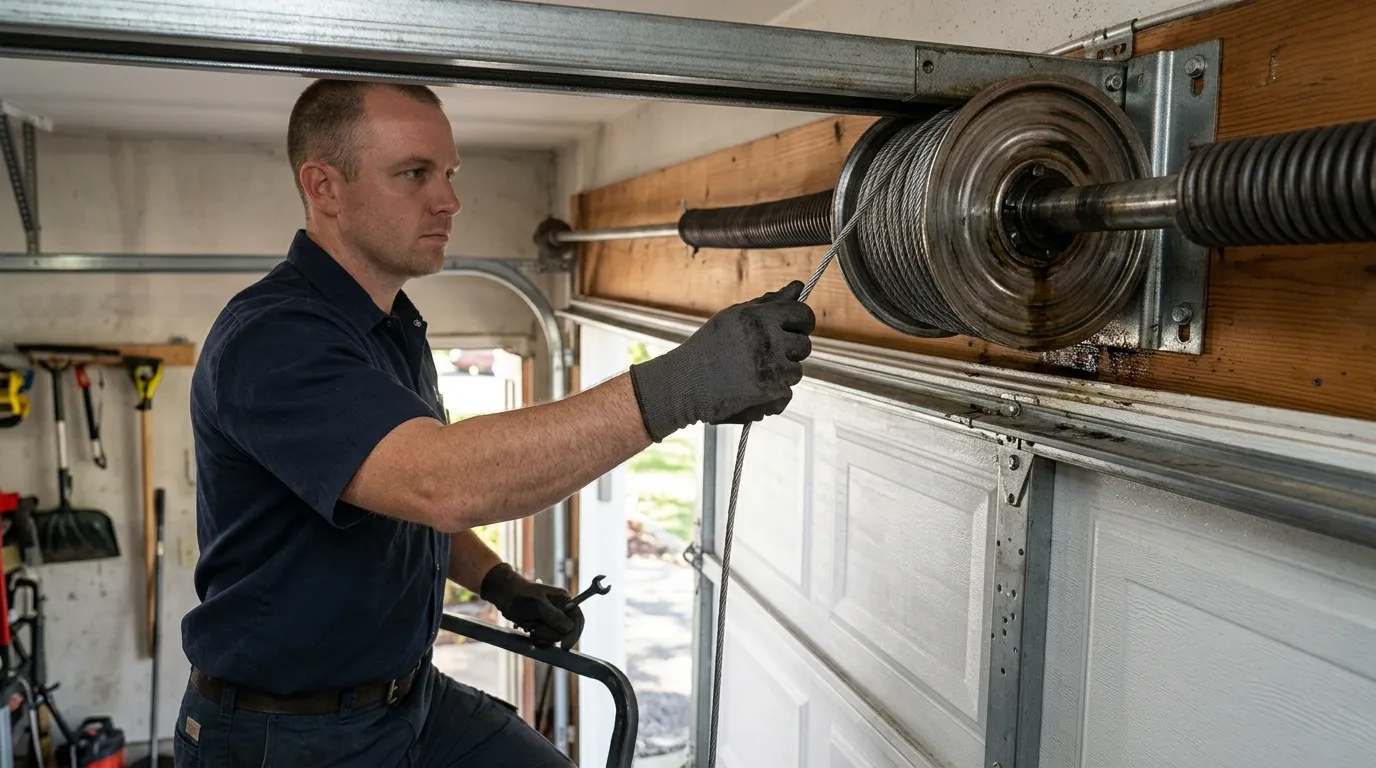
Most of the calls we get in this part of the county are for one of two things: a torsion spring that's let go, or an opener that's grinding, reversing, or just quit. We start by checking the spring wind on the torsion bar - on a standard 7-foot double door that's usually a matched pair, and if one has gone, the other is close behind even if it hasn't snapped yet. We check the cables and drums at the same time, because a spring failure under load frequently frays a cable, and replacing one without the other is how you get a second service call in six months.
On the opener side, we're mostly dealing with the chain or belt-drive units that came standard in houses built through the 2000s across this area. The failure pattern is almost always the same: worn nylon drive gear, a logic board that's lost its memory of travel limits, or a sensor eye that's drifted out of alignment. We test the safety reversal, check the wall control, and confirm the unit is pulling the door on a clean, even track before we call the job done. If a part needs to be special-ordered rather than pulled off the truck, we tell you that up front rather than stringing the job out.
We don't replace a full opener when a gear kit or logic board will do the job at a fraction of the cost. That's a repair, not an upsell.
A torsion spring replacement, including both springs on a double door and a cable check, runs about 60 to 90 minutes for a tech working alone. Opener repairs vary more - a gear or sensor fix is usually under an hour, but a full board replacement or a job where the rail needs re-squaring against the header can push past two hours.
What slows a job down here isn't the labor, it's parts. Houses in this service area were built anywhere from 1953 up through 2014, with the bulk going up in the 2000s, which means we're carrying stock for several generations of spring wire gauge and opener drive systems, not just one. If your unit takes a part we don't have on the truck, that's a return trip, and we'd rather say so than guess and leave you with the wrong wind or the wrong gear ratio installed.
We don't do same-visit financing quotes over the phone for anything beyond a spring and cable job - once an opener board or a track re-square is involved, we need eyes on it first.
The housing stock across this area runs from 1953 to 2014, with most of it landing in the 2000s. That matters because torsion springs are rated by cycle count, not by calendar year, and a spring installed when a 2000s-era house was built is now well past the point where metal fatigue becomes the deciding factor rather than luck. We see this cluster hard in the 2000s-built subdivisions, where a run of houses put up in the same year or two starts failing in the same window.
The climate here sits in a moderate heat band, which isn't the extreme swings you get further west, but it's still enough daily expansion and contraction on steel springs and nylon opener gears to shorten their working life compared to a mild coastal climate. Heat doesn't snap a spring on its own - it just adds another stress cycle every summer afternoon on top of the mechanical ones from opening and closing the door.
Put those two things together - a housing stock concentrated in one construction era, sitting in a climate that keeps adding thermal stress - and you get failures that show up in waves rather than one at a time.
The door that won't open, or opens partway and stops, is the one everyone notices. But the symptom worth paying attention to earlier is the door that's suddenly loud - a bang on close, a shudder partway up, or a door that looks slightly crooked when it's halfway open. That's usually one spring carrying the whole load because its partner has already gone soft or cracked, and it's the stage right before the whole thing binds up or the cable jumps the drum.
On the opener side, watch for a unit that reverses for no reason, or takes two or three tries on the remote before it catches. That's rarely the remote - it's almost always the logic board losing track of where the door actually is, which happens more in units that have been running through a decade or more of Texas summers.
If your door is still opening and closing fine, we're not going to talk you into replacing anything early. We'd rather you call when something actually changes.
If the door is heavy to lift by hand with the opener disconnected, or it slams down fast, that's the spring. If it lifts fine by hand but the opener won't run it smoothly - grinding, stalling, reversing - that's the opener. We can usually tell within a couple minutes on site.
A lot of the houses in this area went up within a year or two of each other in the 2000s, which means the original springs are hitting the end of their cycle life around the same time. It's not a coincidence, it's the construction timeline catching up all at once.
You can, but we usually advise against it on a double door. The two springs are matched to the same wind and wire gauge when installed, and mixing a new one with an old, fatigued one puts uneven load on the door and often leads to a second failure within months.
We stock for the range of systems common across this area's housing, which spans 1953 through 2014. If your opener is an older or less common model, we'll tell you on-site whether we have the part on the truck or need to order it.
Call now or request a free quote - same-day service on most repairs, upfront written pricing.